


What does it mean for a ceramic impeller to achieve a dynamic balancing precision of Grade G2.5?
When you see "ceramic impeller dynamically balanced to G2.5" in a pump spec, it means the impeller's center of mass was kept within a very tight offset from its axis of rotation. No impeller comes out of sintering and finish grinding with perfectly even material distribution. There's always some tiny gap between the center of mass and the rotational center. At speed, that gap turns into a repeating centrifugal force. The faster the impeller spins, the stronger that force gets. Dynamic balancing is about holding that offset within a controlled limit.
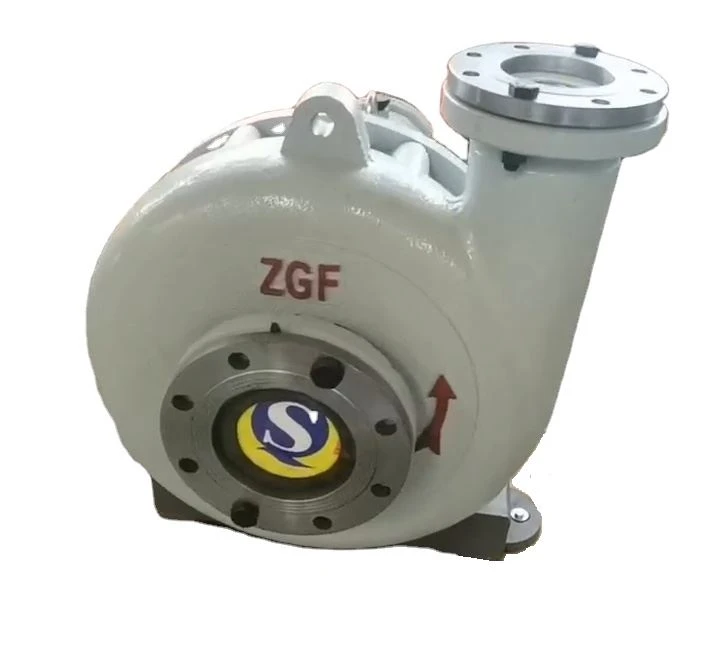
G2.5 comes from ISO 1940. The number after the G is a balance quality grade, expressed in mm/s. It represents the allowable velocity of the rotor's center of mass. G2.5 means 2.5 mm/s. A smaller number means a smaller permitted eccentricity. At 3000 rpm, G2.5 works out to roughly 8 microns of allowable eccentricity - less than one-tenth the thickness of a human hair. If the speed is lower, the allowed eccentricity is larger. If the speed is higher, the allowed eccentricity gets even smaller.
For a ceramic impeller, the number has a more specific meaning. The allowable residual unbalance equals the permitted eccentricity multiplied by impeller mass. Ceramic is usually less dense than stainless steel, so a ceramic impeller of the same dimensions weighs less. That means at G2.5, the absolute allowable unbalance is also smaller. Take a 0.5 kg ceramic impeller running at 3000 rpm. The permitted residual unbalance comes to about 4 g·mm.
Correcting balance to that level means adding or removing material in milligram amounts. Ceramic is hard and brittle, so you can't weld on weights or press in balance slugs the way you can with a metal impeller. It usually has to be done by precision grinding, removing very small amounts of material. Hitting G2.5 consistently tells you the sintered blank quality, fixturing, and grinding control are all kept within a stable range.
G2.5 does not mean zero vibration. It does mean the alternating force caused by unbalance is kept low. Centrifugal force scales with eccentricity, mass, and the square of speed. Eight microns sounds small, but at several thousand rpm that tiny eccentricity produces a repeating load on the bearings and mechanical seal at the same frequency. Compared with G6.3, which is common for pump rotors, G2.5 allows only about 40% of the eccentricity at the same speed, so the unbalance force drops by roughly the same proportion. For a pump user, the practical differences usually show up as lower running noise, cooler bearings, and longer mechanical seal life - especially in continuous-duty applications, installations with rigid piping, or anywhere vibration is a concern.
A ceramic impeller marked G2.5 is not just about what the balancing machine reads once. Density distribution after sintering, wall thickness variation, and how the part is located during finish machining all affect the final balance. Hitting G2.5 on one piece is different from holding it across production. The latter says more about process control. In that sense, this parameter is a useful objective reference for machining accuracy and consistency.
In short, a ceramic impeller balanced to G2.5 has gone through a fairly high-grade dynamic balancing process before leaving the factory. Near its rated speed, the rotational eccentricity caused by uneven mass distribution is held to a few microns. It is not a promise of zero vibration, but it does mean the impeller itself is built to meet the low-vibration, low-noise, and long bearing life demands of a pump. Overall pump performance still depends on the motor, shaft alignment, pump housing, and other factors. G2.5 is a useful hard spec when judging impeller workmanship during selection, but it should not be taken as a standalone measure of complete pump performance.


