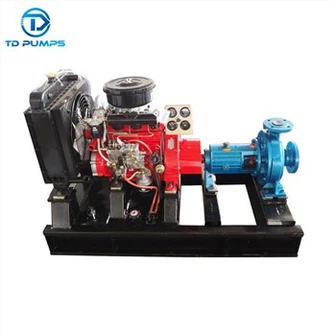
Centrifugal Pump Basic: Internal Flushing And External Flushing Mechanical Seal
Evolution from packing seal to mechanical seal
The pump impeller is mounted on a pump shaft that passes through the pump housing or volute. Without a pump seal, the hollow "wet" part of the shaft into the volute can be a source of persistent leakage.
More than a hundred years ago, most pumps relied on packing to prevent pump leakage while allowing the shaft to rotate freely. This type of packing or packing seal initially forms an area within the pump, known as a stuffing box, into which the packing is pushed or stuffed. These old technology pumps are called "stuffing box structures". Fifty years ago, the technology was improved, and the packing seal consisted of several loops of braided yarn and graphite filler that circled the shaft and was located in the old "stuffing box." These fillers are firmly pressed by the packing gland to prevent system water from seeping out of the pump housing.
Because the friction between the packing and the shaft generates a lot of heat, the packing seal requires a lot of lubrication. This lubrication is done by system water, which flows out of the outlet side of the pump, washes through the packing, and then drains out of the pump. This results in an "open" system, i.e. one that is used regularly and leaks flush water. A "leak" of water is required and drips out of the pump at a rate of about one drop per second. Of course, this water must be replaced with supplementary water, which means introducing more air into the system, thus increasing corrosion.
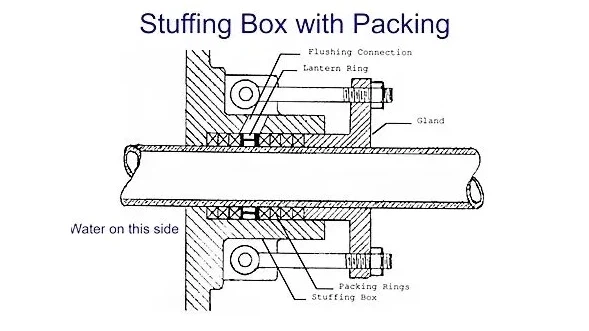
In addition, the packing seal must be adjusted regularly by manually tightening the gland to maintain the correct amount of lubrication, which causes excessive wear on the parts. This type of seal was standard on most industrial pumps decades ago and is still used today in some industrial applications.
Mechanical seals are now standard on HVAC pumps. The mechanical seal does not have any type of leakage, but instead an integrated spring provides pressure against two highly polished sealing surfaces to seal the pump. Even B&G pumps' competitors, whose older pump volute designs had external stuffing boxes, were modified to feature mechanical seals. That's why in HVAC systems today, there are two types of pump mechanical seals - one designed for older pumps with an external flush line, and the other for internal flush seals modeled after B&G's design.
Mechanical seals for external flushing and why they should be avoided
The external flush seal works similarly to other mechanical seals, but is designed to be installed in the dry space of the pump housing/volute, just like the old packing seal. As a result, they require external lubrication to prevent overheating due to friction between the shaft and the rotating and stationary seal components. This lubrication is provided by a capillary type tube that carries water from the outlet of the pump to the mechanical seal, thus making the system a closed system compared to an externally lubricated packing seal. This design has three disadvantages.
The first thing to consider is the size of the flushing pipe. These pipes are usually 1/4 inch or 3/8 inch copper pipes. If the water starts to accumulate sediment in the line or if there is field damage to the line, this can limit the flush flow. Reducing the flow rate will shorten the service life of the seal compared to the flow rate designed by the manufacturer.
The second problem is also related to water quality. The sealing surface is a highly polished surface. Any gravel (solid particles) between the sealing surface will corrode the sealing surface, which can lead to premature failure or leak the sealing.
The third issue is the amount of water to flush the seal to reduce heat buildup caused by friction. The flow rate depends on the pressure difference between the inlet and outlet and the friction loss of the pipe. The manufacturer designed the pipe size and flow rate to match that required by the pump. What happens when we install a variable speed drive on the pump? The suction pressure in a closed system remains fairly constant, but the discharge pressure drops. The flow rate varies with the square root of the pressure difference, and the flushing flow rate also decreases. This may not be a big deal in a chilled water system, but it can lead to a shortened seal life in a heating system.
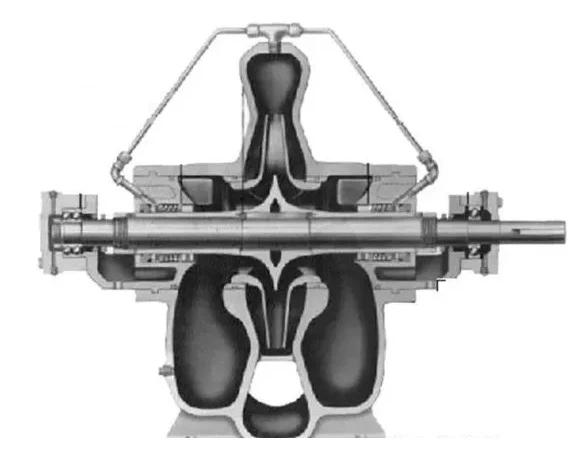
The profile below shows these pipes on either side of a typical external mechanical seal (a middle open double suction pump). Note that they go directly into the stuffing box fitted with a seal.
Internal flushing mechanical seal and its advantages
Like the external flush mechanical seal, the internal flush mechanical seal prevents water from flowing out of the pump housing while allowing the pump shaft to rotate freely. However, the design of the internal flush mechanical seal is more complex and reliable.

The internal mechanical seal is located closer to the impeller of the pump and will fill with water when started. As a result, they are essentially submerged in the system water, exposed to about 25% of the pump fluid. This is valuable because: 1) there is no need for any external lubrication and piping; 2) The water flow rate around the seal is higher, which can provide a better flushing effect, thus extending the service life of the seal.

In an external flush seal, the pipe acts all of the required flush liquid directly on the seal at a very high flow rate. The internal flush seal is essentially submerged in a bathtub filled with water. Why does this extend the life of the seal? Imagine that you are cleaning one of your grandmother's fine China pieces in the sink, and the water quality used to clean it is very bad - there is a lot of sand in the water. Do you use a high-speed spray to clean it, or soak it in the sink and gently swirl it around with a towel? Just like porcelain, centrifugal mechanical seals are expensive to replace and are often exposed to water that contains a lot of particles.
While pumps with an external flush seal design are still available today, we recommend that you specify and require a pump with an internal flush mechanical seal for your hydraulic HVAC system, whether the pump is newly installed or replaces an existing external seal pump. The internal flush seal requires less maintenance and helps extend the life of the pump.