Pigment Paste Viscosity in Coatings: Keeping Shear Under Control With Ceramic Rotary Lobe Pumps
In a coatings plant, moving pigment paste from one tank to another looks like the least interesting part of the day. It can also be the reason a batch comes out with weak gloss, poor hiding, or a color that won't match the last run. Pigment paste viscosity shifts with shear, and the pump usually starts that shift. Transfer equipment, in other words, is part of the formulation whether anyone treats it that way or not. It shapes batch-to-batch color, fineness stability, and thixotropy.
Pigment particles have to be deagglomerated, dispersed, and oriented. Dispersants wrap the particles and provide electrostatic repulsion or steric hindrance. That layer keeps the paste stable. It is not indestructible. Push shear rates high enough-30,000 s⁻¹ is a common industry line-and particles that were already separated can clump back together, or the dispersant layer can be pulled off. Dispersion quality drops. Nothing looks wrong at the pump. The coating shows it later: less gloss, weaker hiding, a color that has moved.

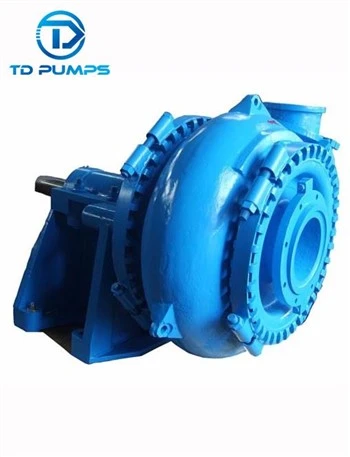
Centrifugal pumps are usually where the trouble starts. A fast-spinning impeller has high tip speed, and that puts strong shear into the paste. At the same flow rate, a centrifugal pump often produces shear rates above 45,000 s⁻¹. A rotary lobe pump can stay near 12,000 s⁻¹. With paste above 5,000 mPa·s, a centrifugal pump is not just inefficient; it keeps adding shear energy the paste cannot take. Gear pumps are not a clean answer either. The meshing clearance creates localized shear that can exceed the paste's limit.
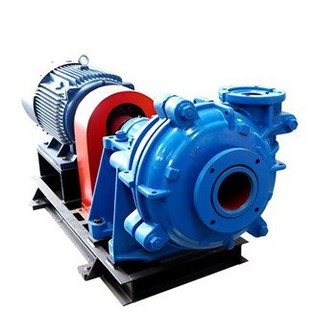
A ceramic rotary lobe pump works on a different principle. It is positive displacement. Two lobes rotate in sync and create a moving volume change in the chamber. Product is pushed through, not flung. The lobes never touch each other or the chamber wall. Clearances usually run 0.1 to 0.5 mm. Flow through the chamber is gentle, with none of the turbulence at an impeller tip. Lobe speed is typically 200 to 500 rpm; a centrifugal pump may run around 2,900 rpm. The product stays close to laminar, and shear rates can be held around 10 to 50 s⁻¹. Centrifugal pumps commonly run 1,000 to 10,000 s⁻¹.
Shear rate and shear force are not the same. Shear rate is how fast the velocity gradient changes in the fluid. Shear force is what actually acts on pigment agglomerates. Low speed lowers shear rate, but the real protection comes from lobe profile. Involute or cycloidal shapes squeeze the product gradually instead of striking it. Agglomerates deform slowly rather than fracture suddenly. For paste that has already been dispersed, that distinction matters.
Ceramic helps in another way. Pigment paste with titanium dioxide or iron oxide is abrasive. Metal pumps wear, lobes and chamber walls lose material, clearances open, and shear behavior changes. A ceramic liner can reach Vickers hardness above 1,600 HV. It resists wear three to five times better than high-chromium cast iron, and in abrasive service it can last four to six times longer than a conventional metal pump. Shear parameters stay stable as the pump ages. Ceramic also does not leach metal ions, which matters in high-purity coatings where iron contamination can shift pigment hue or destabilize the system.
Startup and operating settings matter even with a low-shear pump. Pigment paste often has higher apparent viscosity when still. Going straight to full speed can cause pressure fluctuations in the chamber and a brief local shear spike. A variable frequency drive with a linear ramp brings speed up slowly. For color paste above 5,000 mPa·s, keep top speed near 200 rpm. Discharge pressure needs watching too. Too much back pressure forces more flow through the lobe-to-chamber clearance, and local shear worsens.
Piping gets overlooked. Paste shears just by flowing through pipe. Elbows, reducers, and valves create high-shear zones by changing velocity. A complicated discharge line can add shear even when the pump is gentle. Straight runs and fewer fittings lower the risk.
Moving pigment paste is not a matter of "if it moves, it works." Viscosity reacts to shear, so transfer equipment becomes part of the final product's performance. A ceramic rotary lobe pump does not eliminate shear. It keeps shear within what the paste can handle, and the materials and geometry hold that control over time.