


Production Of Titanium Dioxide Via The Sulfate Process: Key Considerations For Pumping High-Concentration Acidic Slurries Using Ceramic Pumps

The TiO₂ slurry from the sulfate method is a constantly changing target. From the digestion stage to hydrolysis, the level of acid has risen dramatically, and the temperature has reached potentially up to 110 degrees Celsius. The solids in the slurry are not soft rounded grains, but a mixture of unreacted ore, silica, and fine TiO₂ crystals. Some of the solids are hard and sharp-edged. The pump has to deal with the process' abrasion as well as corrosion, with such factors being dynamic.
Ceramic wetted parts usually make sense here, but they aren't a blanket upgrade. Silicon carbide is where most buyers should start. It's hard enough that particle impact doesn't deform the surface the way it does with rubber or many metals-wear life on fine hard solids can run several times longer than high-chrome alloy. Alumina shows up in some lower-load positions, though silicon carbide remains the safer pick for the worst points in the circuit.
The catch is brittleness. A ceramic impeller or casing won't bend under abuse. Dry running, a large foreign object, a slug of oversized agglomerate, or sudden thermal shock can crack it. Rubber will absorb a part of the energy, while ceramic will not do so. This does not mean that ceramic is weak, it just means that the system must avoid large solids entering it and the pump must be operated with caution. If there is debris that can get to the suction without making its way upstream, make sure to handle this before selecting the material. No ceramic pump compensates for a dirty suction system.
Ceramic wetted components are able to deal with sulfuric acid at the specifications that this method brings, without the temperature restrictions posed by many rubber coatings. The smoothness of its surface is also beneficial for minimizing scaling - when the acid gets varied or the slurry cools down in the idle pipeline, crystals form faster on rougher surfaces.
The seal area deserves more scrutiny than the casing. A single mechanical seal in hot acid slurry is a poor bet. Double mechanical seals with barrier fluid are the practical setup, and faces should be silicon carbide on silicon carbide. Barrier fluid keeps acid off the atmospheric side and pulls heat out of the faces. Lose barrier pressure or flow and acid can crystallize between the faces and chew them up fast. Seal flush isn't a minor detail on this duty-it's part of keeping the pump alive.
Suction conditions matter as much as material. TiO₂ solids settle quickly once velocity drops. A settled bed narrows the pipe and changes what the pump receives. Operating with low flow or having a partially-obstructed suction line causes cavitation. In ceramics, cavitation may be more than noise and head loss. Cavitation generates energy concentrated on a brittle surface and can initiate cracks. Use a short suction line that is inclined to the pump and has sufficient speed to transport solids. If required by the operation, throttle the discharge, being within the curve. Never throttle on the suction side.
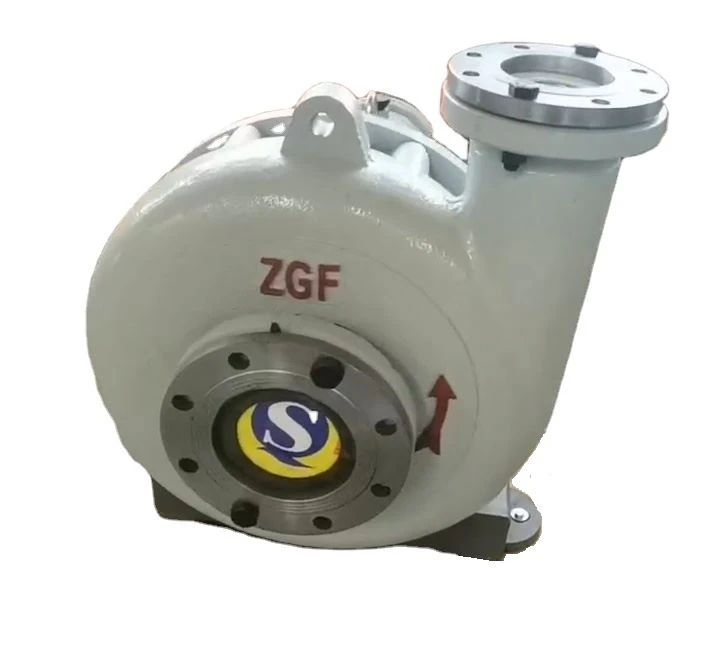
Shutdown is another quiet failure point. Acid slurry left in the casing cools and can set around the impeller. Starting against that mass puts a bending load on a material with almost no ductility. Flush with clean water before the pump stops, while slurry is still moving-not after the line has sat overnight. Same rule for standby pumps: a ceramic pump is a bad place to store process slurry.
In terms of sourcing, it's best to avoid talking about ceramics and metals. Instead, balloon to the specifics: What is the particle size at the pump? What is the suction design? What are the seal arrangements? What is the flush protocol? The ceramic wetted parts are worth the investment when dealing with fine hard particles, consistent suction design, and a proper shutdown procedure. The same pump working with coarse particles, inconsistent suction, and no flushes will push it closer to what it does worst. Thus, applying the correct installations allows the ceramic pump to change a complicated operation into a solvable maintenance issue.


