


Which Operating Conditions Are Best Suited for Replacing Steel with Ceramic?
Let's cut to the chase: swapping steel for ceramic in slurry pumps looks great in a brochure, but it's not always the right move. The real question is-what kind of duty are you dealing with? Because ceramic shines in some places and falls flat in others. Here's the field-level view on where "ceramic over steel" actually pays off.

Heavy abrasion – solids that just chew things up
This is ceramic's home turf. Think mining, mineral processing, coal-fired power – slurries loaded with quartz, ore fines, or other hard grit. Steel parts get sandblasted down in no time; we've seen metal impellers lose meaningful flow in under a thousand hours. Ceramic? It's three to five times harder. That hardness resists the cutting action of sharp particles way better. One silicon-carbide pump we followed ran nine times longer than its steel predecessor. And in a primary grinding circuit, the ceramic unit didn't just last longer-it also nearly doubled the life of downstream valves and elbows.
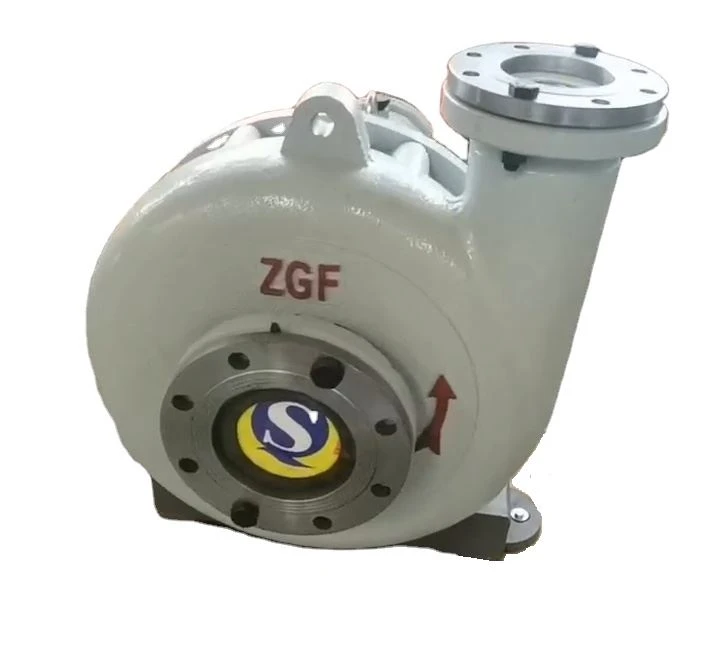
Corrosive services – acids, alkalis, salty brines
Move over to chemical plants, hydrometallurgy, or wet scrubbers. The slurry there is often nasty-low pH, high pH, or loaded with chlorides. Steel pits, perforates, and starts leaking, and then you're dealing with product loss and expensive cleanups. Ceramic is chemically inert across a wide range (pH 0 to 12, except hydrofluoric acid). It doesn't thin out or corrode over time. That's why you see ceramic pumps taking over in power-plant desulfurization and zero-liquid-discharge systems-they just keep running.

The double whammy – abrasion plus corrosion
This is where metal really gets stuck. You need wear resistance, you need corrosion resistance, but most alloys can only give you one. Ceramic handles both at the same time. So in high-density ore slurries that also have a low pH, or in chemical streams with both solids and aggressive acids, ceramic life typically hits five to ten times what you'd get from steel. That's not a guess-it's from actual plant data.
Hot services
Ceramics don't expand much with heat, so they stay dimensionally stable when things get warm. Standard ceramic pump builds handle -20°C up to 110°C, and specialty grades can go way higher-all the way to 1700°C. If your process runs hot or swings through wide temperature changes, ceramic gives you a lot more peace of mind than steel.
Now for the flip side – ceramic isn't bulletproof
It's hard, but it's also brittle. Impact is its weak spot. If your slurry carries chunks bigger than about 4–5 millimeters, you need to double-check whether the specific ceramic grade has enough fracture toughness for that duty. And yes, the upfront cost stings-typically 1.5 to 2× what you'd pay for a steel pump. But when you add up longer part life, fewer shutdowns, and less maintenance, the total cost usually tilts back in ceramic's favor. The catch? You have to get the solids analysis, pH reading, and temperature profile right before you spec the pump. Do that homework, and ceramic can be a game-changer. Skip it, and you're better off sticking with steel.


